Table of ContentsA Biased View of Why Single Payer Health Care Is BadTop Guidelines Of What Is A Health Care Spending Account
Two public health insurance coverage plans, Medicare and the Children's Health Insurance coverage Program (CHIP), target older individuals and children, respectively. Medicare, which is available to those age 65 or older, likewise serves people with particular impairments - how much is the health care penalty. The CHIP strategy has earnings limitations and covers children and children up to the age of 18.
Medical facilities, center and neighborhood health firms can be very different from other work environments. Healthcare systems are complex and there are many things you need to learn about kinds of hospital systems, client care, insurance coverage, health care suppliers and legal concerns. This tutorial will help you learn standard healthcare ideas so you can be successful on the job and understand the system.
The image listed below programs the different groups you will be working with. As you work with the healthcare team, you will require to know about healthcare facility systems, types of care, and the functions of each member of the health care team. As you deal with patients, you will need to comprehend various kinds of insurance coverage, how to help uninsured patients and how to protect patient rights and privacy.
After you finish the tutorial, you will have the ability to: Describe the distinctions in between personal, public and non-profit hospital systems Define types of patient care including primary care, specialized care and emergency situation care Explain how insurance coverage works Identify types of private insurance plans and public insurance coverage programs Identify the roles and responsibilities of various members of the health care group Explain the Patient Costs of Rights Explain why it is necessary to follow HIPAA guidelines and secure client details List things you can do to safeguard client health information.
" Health care services" indicates the furnishing of medicine, medical or surgical treatment, nursing, healthcare facility service, oral service, optometrical service, complementary health services or any or all of the enumerated services or any other essential services of like character, whether or not contingent upon illness or individual injury, as well as the furnishing to any individual of any and all other services and items for the purpose of preventing, minimizing, treating or recovering human illness, handicap or injury.
in Chinese (Traditional) in Chinese (Conventional) in Japanese in French in Catalan in Arabic in Norwegian in Korean in Portuguese in Chinese (Simplified) in Italian soins [masculine, plural] mdicaux Required a translator? Get a fast, totally free translation!.
Little Known Facts About What Does Universal Health Care Mean.
[helth-kair] REVEAL IPA/ hlkr/ PHONETIC RESPELLINGthe field concerned with the upkeep or remediation of the health of the body or mind.any of the procedures or techniques used in this field.of, connecting to, or associated with healthcare: healthcare employees; a health care center. Embellish your word knowledge with the words from the week of August 17 to August 23, 2020! Concern 1 of 7What does "limn" mean?healing by second intention, recovery by 3rd intent, health, health camp, healthcard, healthcare, healthcare proxy, health centre , health check, gym, health farm Dictionary.com Unabridged Based on the Random House Unabridged Dictionary, Random Home, Inc. To make sure healthcare coverage for everyone in the United States through a foundation of comprehensive and longitudinal main care. The intent of this policy document is to provide the American Academy of Family Physicians( AAFP )and its Board of Directors the required advocacy flexibility to consider all alternatives that may come before federal and state federal governments and the American individuals in working to attain the objective of health care coverage for all a goal based upon AAFP policy which recognizes that health is a fundamental human right for each person and that the right to health includes universal access to timely, acceptable and budget-friendly health care of appropriate quality. Healthcare costs continue to increase at an unsustainable rate and quality is.
far from ideal.i, ii Over the past twenty years, policies implemented through the Kid's Medical insurance Program (CHIP) and the Client Security and Affordable Care Act (ACA )have actually extended access to cost effective healthcare protection to millions of formerly uninsured, non-Medicare eligible grownups and kids. Nevertheless, the rollback of some arrangements of these policies has increased the portion of those uninsured to 15.5%, iv near to what it was one years ago when our uninsured rate was nearing 17 %, with almost 50 million people uninsured.v Making sure that all people in the United States have cost effective health care protection that offers a specified set of necessary health benefits( EHB) is required in order to approach a healthier and more efficient society. As noted by the Commonwealth Fund, the style of a system to supply health care coverage to all people" will have a deep effect on its ability to make.
sustainable and methodical improvements in access to care, equity, quality of care, efficiency, and expense control." vi Any successful health system reform designed to achieve healthcare protection for all should re-emphasize the centrality of medical care, renew the medical care infrastructure in the United States, and upgrade the manner of main care delivery and payment. Research studies confirm that if medical care practices revamp how they run so that they are more accessible, promote avoidance, proactively assistance patients who have chronic health problems, and engage patients in self-management and decision-making, https://www.scribd.com/document/473918976/95797-h1-style-clear-both-id-content-section-0-Some-Known-Incorrect-Statements-About-How-To-Take-Care-Of-Mental-Health-h1 healthcare quality enhances along with the expense performance of care.vii Family medication and main care are the only entities charged with longitudinal continuity of take care of the whole patient. Nevertheless, the current United States health care system stops working to provide comprehensive primary care because of the way primary care.
has been, and is currently, financed. According to the Center for Evaluative Scientific Sciences at Dartmouth (now called the Dartmouth Institute for Health Policy and Scientific Practice), U.S. specifies that rely more on medical care have lower Medicare costs (inpatient reimbursements and Part B payments ); lower resource inputs( hospital beds, intensive care unit [ICU] beds, overall physician labor, medical care labor, and medical specialist labor ); lower utilization rates( doctor gos to, days in the ICU, days in the healthcare facility, and clients seeing 10 or more doctors); and better quality of care (less ICU deaths and a greater composite quality rating). viii The patient-centered medical home( PCMH) is one method to offering detailed advanced medical care (APC) for children, youth, grownups, and the elderly. Each patient has an ongoing relationship with a personal main care physician trained to supply first-contact, collaborated, continuous, and comprehensive.
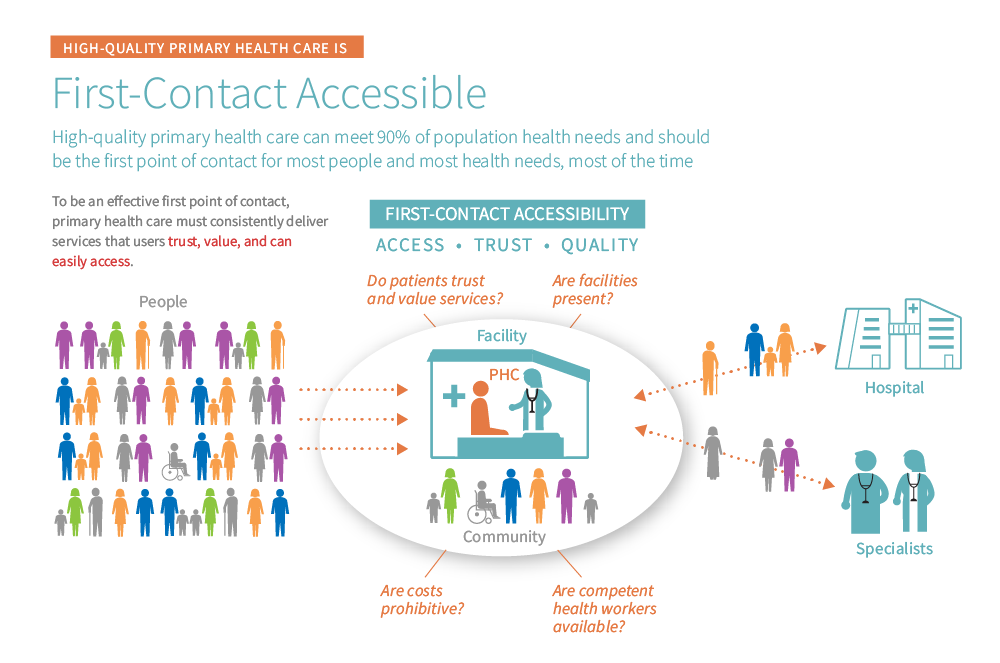
care. The individual doctor leads a group of individuals at the practice level and beyond who jointly take duty for the continuous care of patients.ix Basic modification is required to shift the direction of the U.S. Existing resources must be assigned differently, and brand-new resources should be deployed to attain these wanted outcomes. Payment policies by all payers must change to show a greater investment in main care to completely support and sustain medical care change and shipment. Workforce policies should be resolved to ensure a strong cadre of the household physicians and other medical care physicians who are so integral to a high-functioning healthcare team.